
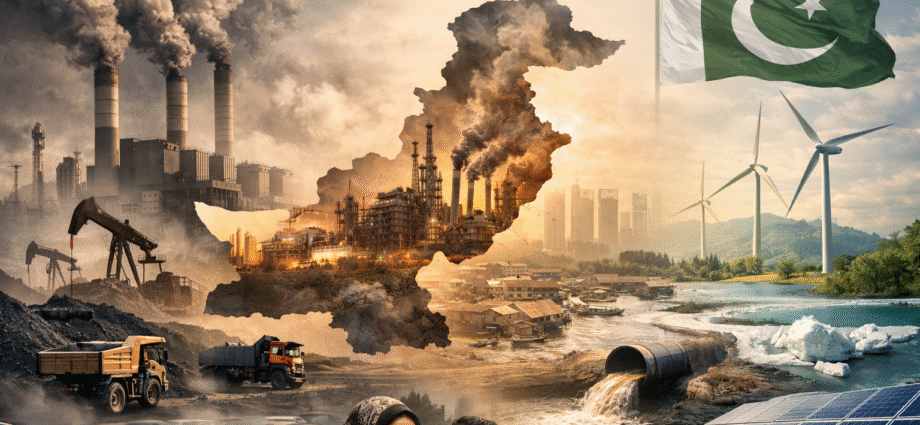
Pakistan’s Fossil Fuel Dependence and Environmental Challenge
Pakistan’s energy sector remains heavily dependent on fossil fuels, creating serious environmental, health, and economic concerns. Coal, natural gas, and oil together make up nearly 85% of the country’s energy mix, underscoring how heavily the national system relies on conventional fuel sources.
Electricity generation is largely based on thermal power. Coal contributes around 12%, natural gas supplies about 33%, and oil-based plants add nearly 28%. While these sources have supported the growth of energy demand, they have also increased Pakistan’s carbon footprint. The country now emits approximately 200 million tons of carbon dioxide annually, placing it among the world’s top 20 CO₂ emitters.
The environmental impact extends beyond greenhouse gas emissions. Burning coal and oil releases harmful pollutants such as sulfur dioxide, nitrogen oxides, and fine particulate matter. These pollutants worsen air quality and increase risks of respiratory illness, heart disease, and other health problems. Major cities such as Karachi, Lahore, and Islamabad frequently record air pollution levels far above safe international standards.
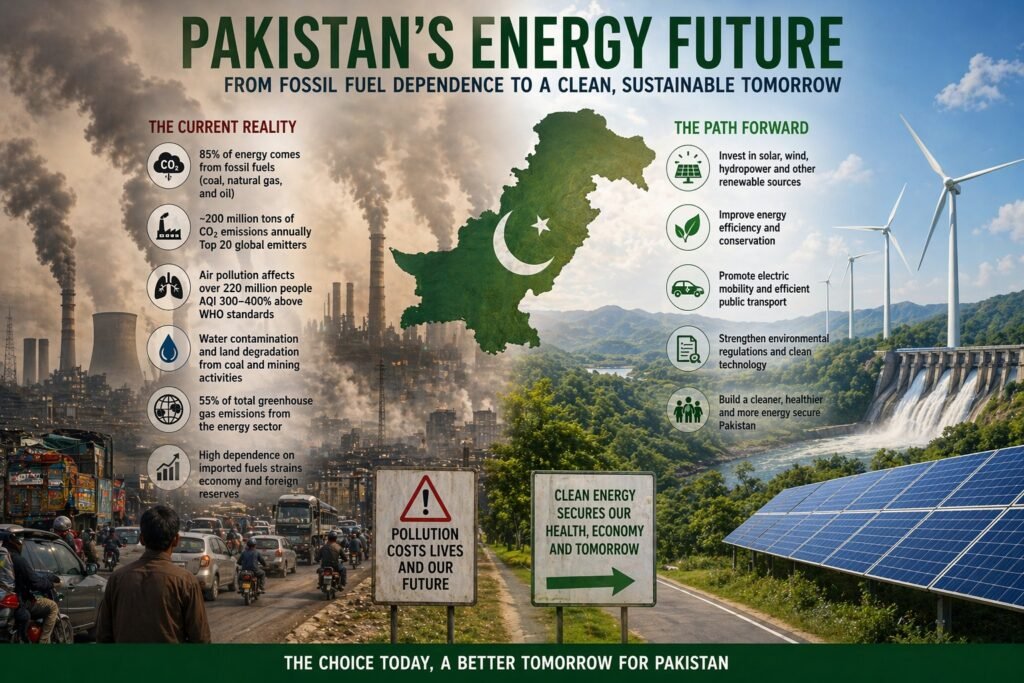
Water and land resources are also affected. Waste discharge from thermal plants and coal ash can contaminate rivers and groundwater, while mining activities in Sindh and Balochistan damage land, ecosystems, and local livelihoods. In a country already facing water stress and environmental degradation, these impacts are significant.
Energy-related emissions account for nearly 55% of Pakistan’s total greenhouse gas emissions, making the power sector a major contributor to climate risk. At the same time, Pakistan remains highly vulnerable to floods, droughts, heatwaves, and other climate disasters.
Dependence on imported petroleum products also puts pressure on the economy by raising fuel costs and depleting foreign exchange reserves.
Pakistan has strong potential in solar, wind, hydropower, and energy efficiency. Expanding renewable energy, improving transport systems, and strengthening environmental policies can reduce dependence on fossil fuels and create a cleaner, more secure future. The transition to sustainable energy is now both an environmental necessity and an economic priority.
Dr. Shahbaz Tariq
Dr. Shahbaz Tariq is a strategic leader and researcher based in Islamabad with 15+ years of experience across international NGOs, a diplomatic mission, and academia. He currently serves as Head of Research at Freedom Gate Prosperity and is an Adjunct Faculty member at Hamdard University.
Contact: +92 333 7473003 | shahbaz.tariq@fgp.org.pk
