
Between Flood and Future: Reimagining Pakistan's Climate Governance
The international community today stands at a turning point where climate change is no longer a theoretical threat discussed in academic conferences or green activist forums but a lived reality which shocks economies, reorders societies, and challenges the very building blocks of governance. There are shattered all-time global temperature records year after year, retreating glaciers at rates without precedent in the history of the planet, and mounting natural disasters by intensity and frequency.
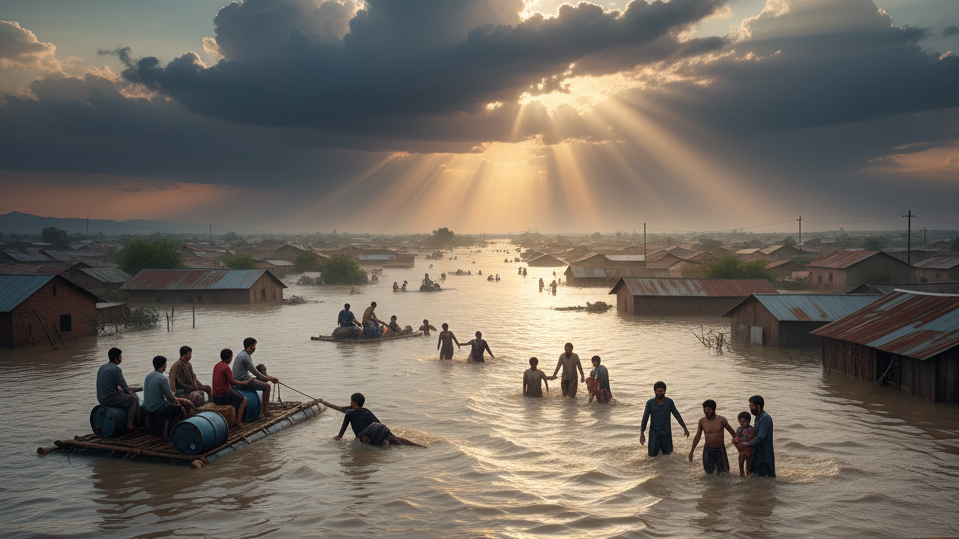
Around the world, we witness fires ravaging entire landscapes in Australia, California, and the Mediterranean; floods leveling cities from Germany to Bangladesh; and hurricanes, cyclones, and droughts breaking lives and livelihoods. The international conversation is shifting from prevention to adaptation, denial to bitter acknowledgment that time is ticking much faster than we ever imagined. In this light, climate governance poses the ultimate test of state capacity, international cooperation, and social resilience. To Pakistan, however, it is particularly a critical test, as the country is simultaneously at the frontlines of exposure and on the fringes of global decision-making.
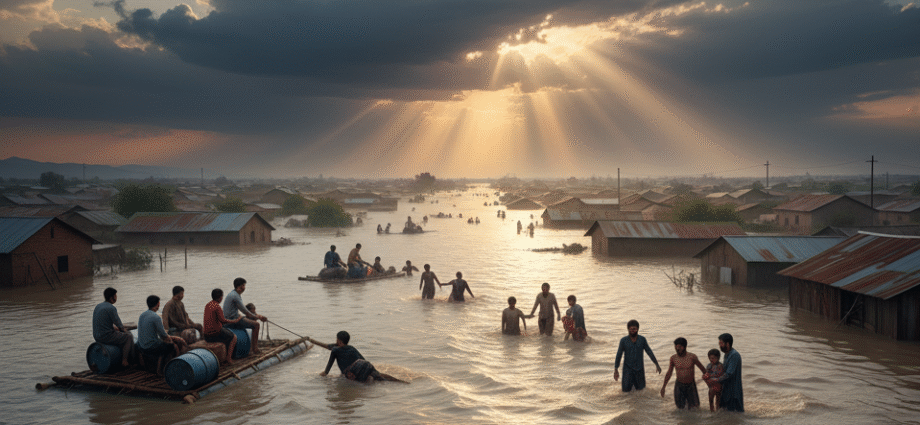
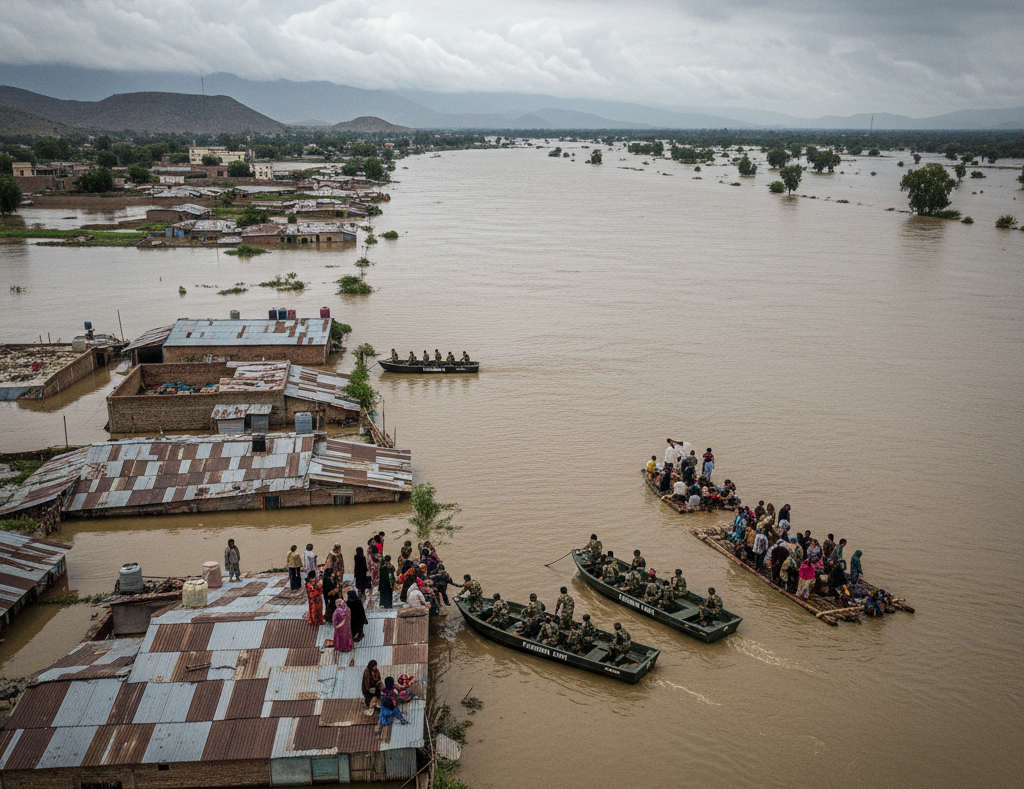
Pakistan is among the most climate-exposed nations, although it produces less than one percent of the world’s greenhouse gas emissions. The irony is indicative of the asymmetry of climate change: the lowest emitters usually lose the most. 2022 floods, which covered a third of the country and impacted over 33 million people, were a stark reminder that Pakistan is no longer dealing with theoretical estimates but real destruction. The situation in 2025 is no less grave as the havoc being played by the rains and current flood knows no bound as yet.
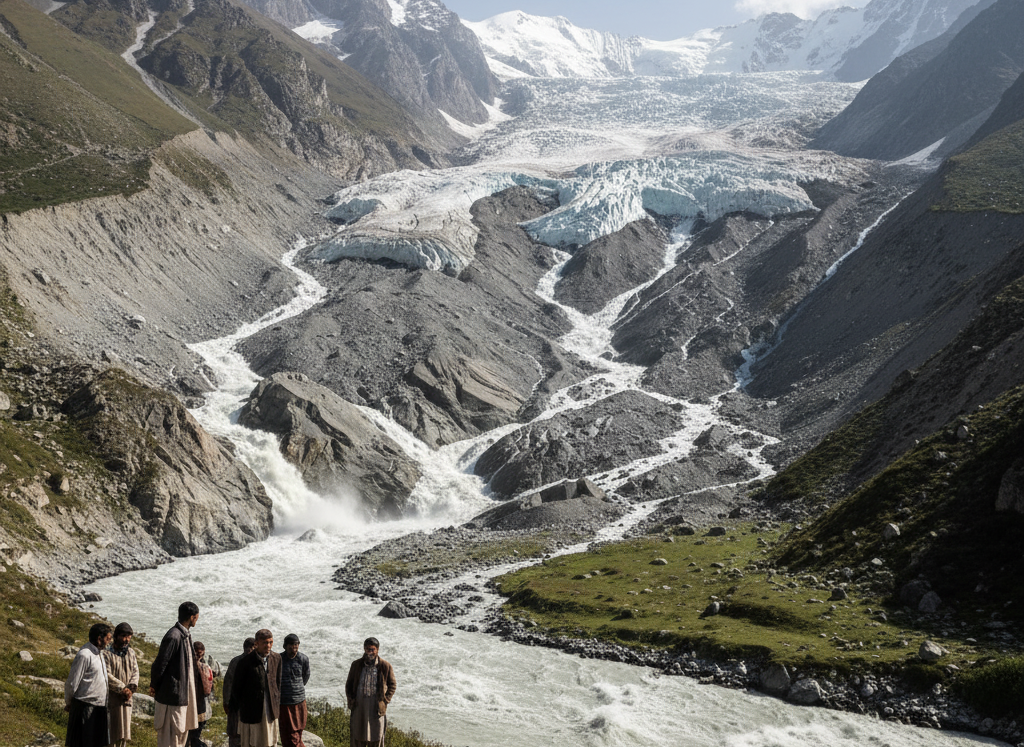
Heatwaves have destroyed Karachi, hailstorms incident in Islamabad, arid tracts of Sindh and Balochistan are reeling from water scarcity and melting glaciers in the north are threatening both catastrophic glacial lake outburst floods and recurring water insecurity. The world of today may bicker over carbon markets, green technologies, and energy shifts, but for Pakistan, the issue is survival – of preventing villages from being washed away, cities from being smothered by the debris of unorganized urbanization, and food systems that feed millions from falling apart under climatic pressure. But the actual question is not whether Pakistan knows these threats, but whether its institutions of governance can respond.
Pakistan’s climate governance problem is multifaceted and sunk deep within its wider governance crisis. At its core is weak institutional capacity. Ministries replicate one another, policies become disaggregated, and bureaucratic opposition generally prevents long-term thinking. Climate policy actually has been authored, but implementation is haphazard and underfunded. Conservation comes second to immediate political priorities, with ribbon-cutting ceremonies and mega-projects overriding the preservation of habitats. Coordination between federation and provincial levels is inadequate as well, an issue that was aggravated by the 18th Amendment’s delegation of environmental responsibilities to provinces. Though decentralization was meant to empower local government, it generally became fragmentation, where provinces have no capacity and coordination, and national cohesion is eroded.
Furthermore, the climate policy of Pakistan is also hampered by inadequate data, research, and early warning systems. Floods or droughts often catch authorities by surprise, not because they are unexpected occurrences, but because there is poor institutional preparedness. Corruption and mismanagement offer a different point of failure: international climate funds, when they dribble in, are wasted or held up. Public awareness is low, and global warming is still largely thought of as a “Western agenda” rather than an issue of survival here at home. Low societal ownership limits pressure on politicians to put environmental management high on their agendas. Finally, the energy sector—dominated by fossil fuels and circular debt crises – is recalcitrant to change, further digging Pakistan into unsustainable paths.
Lessons could be learned at the international level. Bangladesh, frequently cited as a comparable example of vulnerability, has become an unexpected leader in adaptation against climate. By spending in early warning systems based on the community, cyclone shelters, and climate-resilient agriculture, Bangladesh has minimized disaster-related deaths in the last two decades. Costa Rica offers another encouraging case, demonstrating how political will and sustained policies can generate reforestation and renewable energy transitions. Rich nations, however, are facing their own contradictions as well: while pledging net-zero goals, they keep renewing fossil fuel subsidies and failing their climate finance commitments. Such hypocrisy highlights the necessity for countries like Pakistan to build resilience within rather than searching for a savior from abroad.
Pakistan has its own lessons to learn that are worthwhile in its own history. The tree plantation drives, much maligned at times, demonstrated that mass tree planting campaigns can deliver if political will and eco-priority align. Climate governance has developed through a series of policies and initiatives aimed at addressing environmental and disaster challenges. The National Climate Change Policy of 2012, later revised in 2021, laid the foundation for adaptation and mitigation strategies, followed by the Framework for Implementation of Climate Change Policy (2014–2030), which set sectoral targets for agriculture, forestry, energy, and disaster risk reduction. Institutional steps such as the creation of the National Disaster Management Authority (NDMA) in 2007 strengthened disaster preparedness, while initiatives like the adoption of net-metering regulations and the Energy Efficiency and Conservation Act of 2016 advanced the shift toward sustainable energy use. At the provincial level, initiatives such as large-scale mangrove restoration in Sindh and the Green Development Program in Punjab have addressed ecosystem revival, air pollution, and industrial emissions. Internationally, Pakistan has actively engaged in climate diplomacy, including ratifying the Paris Agreement in 2016, reflecting a broader commitment to both global responsibility and national resilience. However, projects are too often left incomplete when the government changes, and environmental progress is held hostage to political change.
The solutions to Pakistan’s climate crisis of governance cannot be shallow slogans of “green revolutions” or “climate justice.” They call for a radical rethink of governance. Institutional strengthening must be the top priority: Pakistan requires strong, technically proficient, and empowered climate institutions that can coordinate among federal, provincial, and local levels with continuity and transparency. Climate management cannot be siloed in the environment ministry but needs to cross-cut water, energy, agriculture, health, and urban planning. Climate finance requires both external and internal reforms. Externally, Pakistan must continue to press for climate finance but, at home, it must improve financial management so that the funds are spent transparently and efficiently. Innovative instruments like green bonds, carbon pricing, and public-private partnerships must be explored while fossil fuel subsidies must be reconfigured.
Third, Pakistan must invest in adaptation strategies rooted in local realities. From developing climate-resilient plant and water-conserving irrigation technologies to upgrading urban drainage infrastructure, adaptation must be community-centered as well as technology-driven. Education and information campaigns are imperative to place climate literacy in the mainstream so that citizens, not just policymakers, are stakeholders in fighting climate change. Fourth, technology and information must be at the forefront: designing early warning systems, using satellite imaging for disaster management, and facilitating research institutions to generate credible knowledge are all vital starting points. Fifth, there need to be governance reforms that are inclusive. Women, rural society, and the marginalized are most adversely affected by climate change, and they must be institutionalized in decision-making processes.
Significantly, climate management cannot be viewed as a standalone sectoral transformation but as a chance to redefine Pakistan’s development model. Instead of equating development with asphalt and cement, Pakistan must embrace a vision whereby development means resilience, sustainability, and harmony with environmental systems. Urbanization must yield to greens, renewable energy must replace dependency on imported fossil fuels, and farming must embrace sustainable agriculture. Pakistan’s youth, a political strength, must be mobilized not only as voters but as climate entrepreneurs, innovators, and champions.
Others might respond that Pakistan’s climate policy failures are symptomatic of deeper political dysfunction and are therefore incurable until larger governance crises are solved. But waiting for perfection in governance is not an option in the fast-unfolding climate emergency. The climate crisis demands that Pakistan work within its constraints, experiment with new concepts, and scale up what works. Just as Pakistan emerged as the world’s case study of vulnerability after the 2022 floods, so too can it be a model of resilience if it chooses to embrace transformative governance.
In regard to Pakistan’s climate policy, one is brought back to two assumptions. The first is that “climate change is not just an environmental issue for Pakistan; it is a test of governance that will define the very survival of the state and society.” The second is that “in the battle for climate resilience, Pakistan’s greatest vulnerability is not its exposure, but its inability to govern with foresight, courage, and continuity.” These assumptions remind that while the challenges are great, solutions are within their reach if leadership and society unite under a shared perception: survival itself is threatened.
Pakistan stands at a turning point in history. The red skies over Karachi, Sindh’s inundated plains, and Gilgit-Baltistan’s melting glaciers are not isolated events but symptoms of a crisis-prone system. Short-termism, corruption, and fragmentation need to be dispelled from governance for the climate not to keep costing a devastating price. But if Pakistan is courageous enough to rethink its leadership, found its policies on resilience, and give climate change the attention it deserves, then another story can be written—one where the sky can still be red, but with the colors of dawn, not doom.

Dr Ayesha Ali
About Author :Dr. Ayesha Ali is an Associate Professor with an accomplished academic profile and a strong record of research, teaching, and institutional development. She has authored several research papers on governance reforms, sustainable development, and higher education, and actively contributes to national and international policy dialogues. Her areas of expertise include Governance, Public Policy, Public Administration, Management Sciences, and Sustainable Development, with a particular focus on strengthening institutions through evidence-based policymaking and academic innovation.
The author can be reached at 22ayesha11@gmail.com
